
The Journey of AI—
from Its Origins to
What Comes Next.
Understand the breakthroughs that brought us here. Explore the possibilities ahead. Prepare for a future still taking shape.
A remarkable story.
An unfinished future.
Artificial intelligence is more than a collection of tools. It is a long human pursuit to understand—and extend—what intelligence can do.
We help people understand the evolution of AI, explore the possibility of a technological singularity, and prepare for a future that may be profoundly different.
How we arrived here.
Select a milestone. Follow the ideas that changed the direction of artificial intelligence.
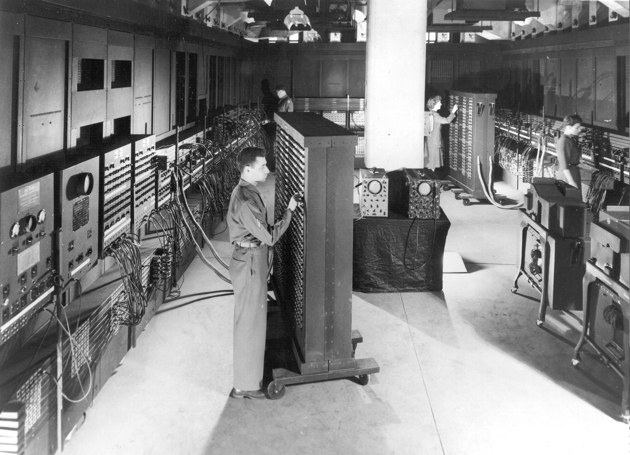
Before intelligence, there was computation.
Imagine a room where computation is visible: cabinets, cables, switches, and people translating a problem into instructions. The early electronic computer made calculation dramatically faster, but it did not automatically make the machine intelligent. The distinction between carrying out a procedure and choosing a useful procedure became a central question for AI.
The pioneers of AI inherited that question. Could reasoning be expressed as rules? Could a machine learn from examples? Could language become something a computer could work with? Each approach opened possibilities while exposing new limits.
The beginning of the journey is therefore a human story as much as a technical one. Programmers, engineers, and researchers built the foundations that later systems would extend. Understanding their work helps us see today’s tools as the latest chapter of a much longer experiment.
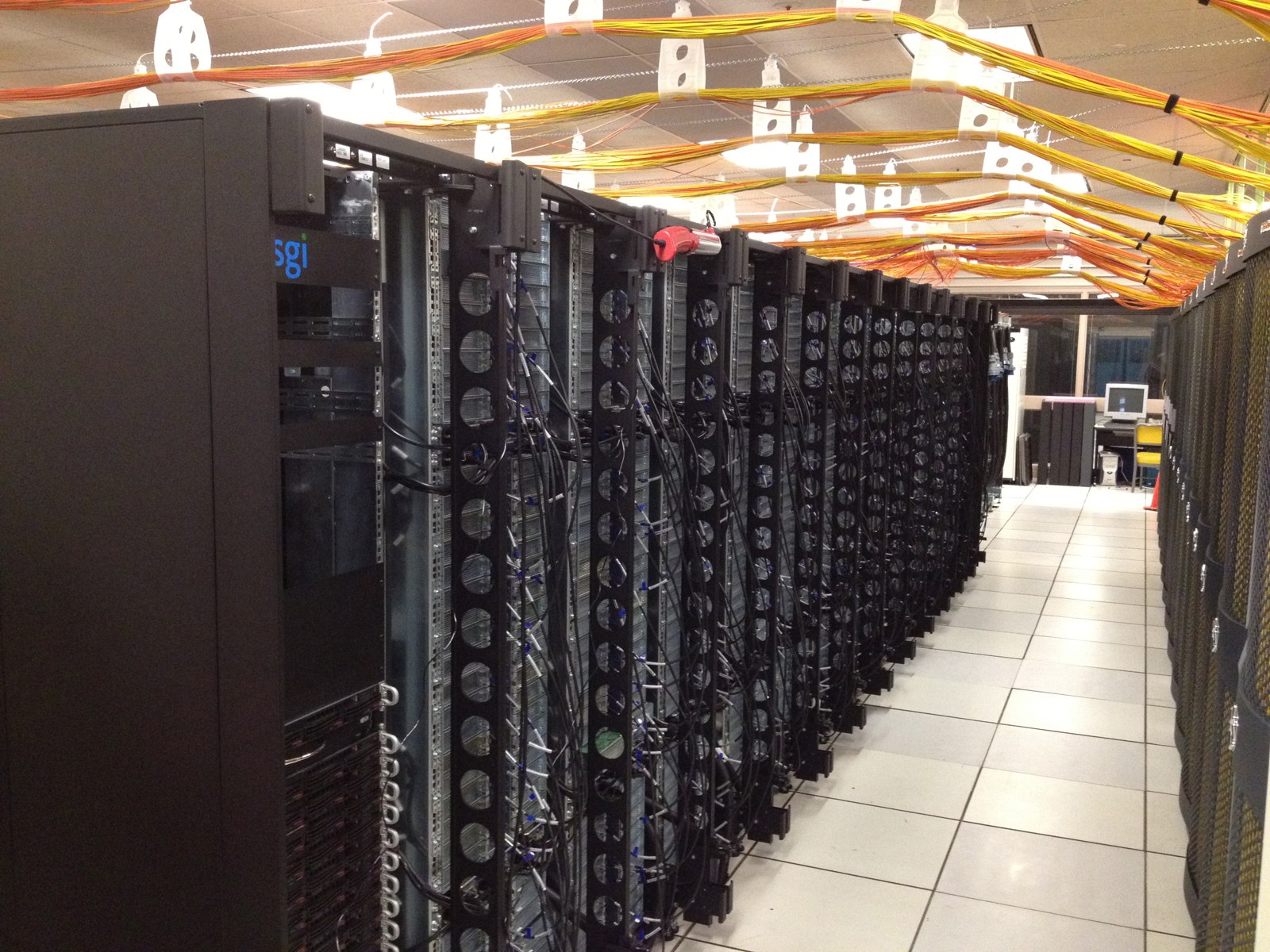
Ideas need an infrastructure.
A learning algorithm is only part of the story. Training requires computation, data handling, and a way to measure whether a change actually improves performance. Powerful facilities make large experiments possible, while software and specialized hardware determine how efficiently the work can be done.
This photograph shows NASA’s Pleiades system in an earlier era of scientific supercomputing. It is not a photograph of a present-day AI training cluster. Its relevance is the physical reality beneath digital progress: racks, connections, power, cooling, and the people who keep complex systems operating.
That reality also matters when thinking about the singularity. Even highly capable software works within a material world. Manufacturing hardware, delivering energy, and running experiments may remain constraints on the speed at which intelligence can improve itself.
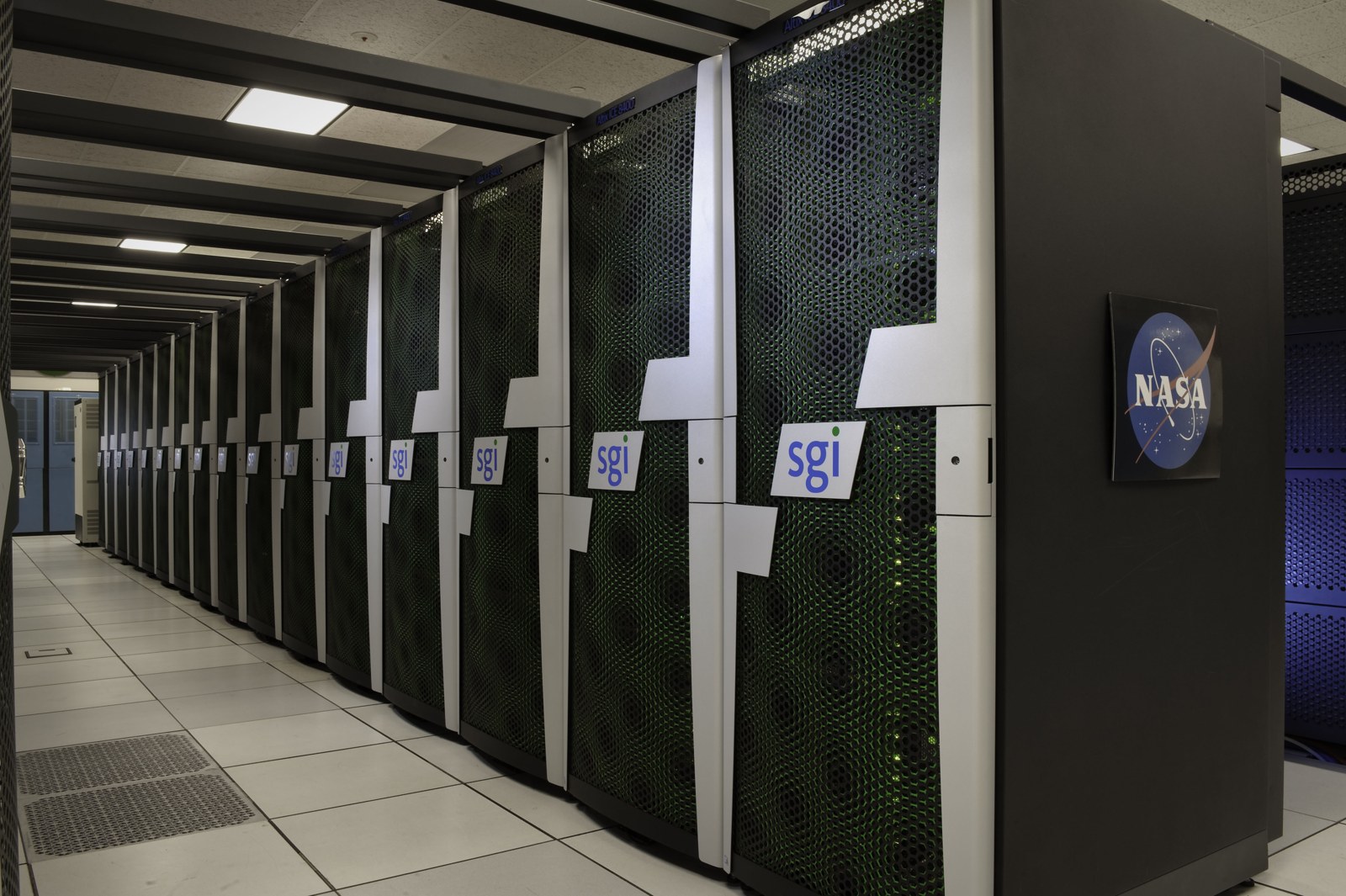
From processing data to generating possibilities.
Generative AI changes how people interact with computation. Instead of asking only for a stored fact or a fixed calculation, a user can request a draft, an explanation, a design, or a piece of software. That flexibility is useful, but it also makes evaluation harder: an answer can look complete while hiding a crucial mistake.
An effective workflow separates generation from verification. Drafting a scientific explanation is different from establishing the science behind it. Producing code is different from showing that the program works. Making a prediction is different from demonstrating that the assumptions are sound.
The enduring skill is judgment. Ask what the system was given, what evidence supports its response, and who remains responsible for the result. As AI becomes more capable, these questions become more valuable rather than less.
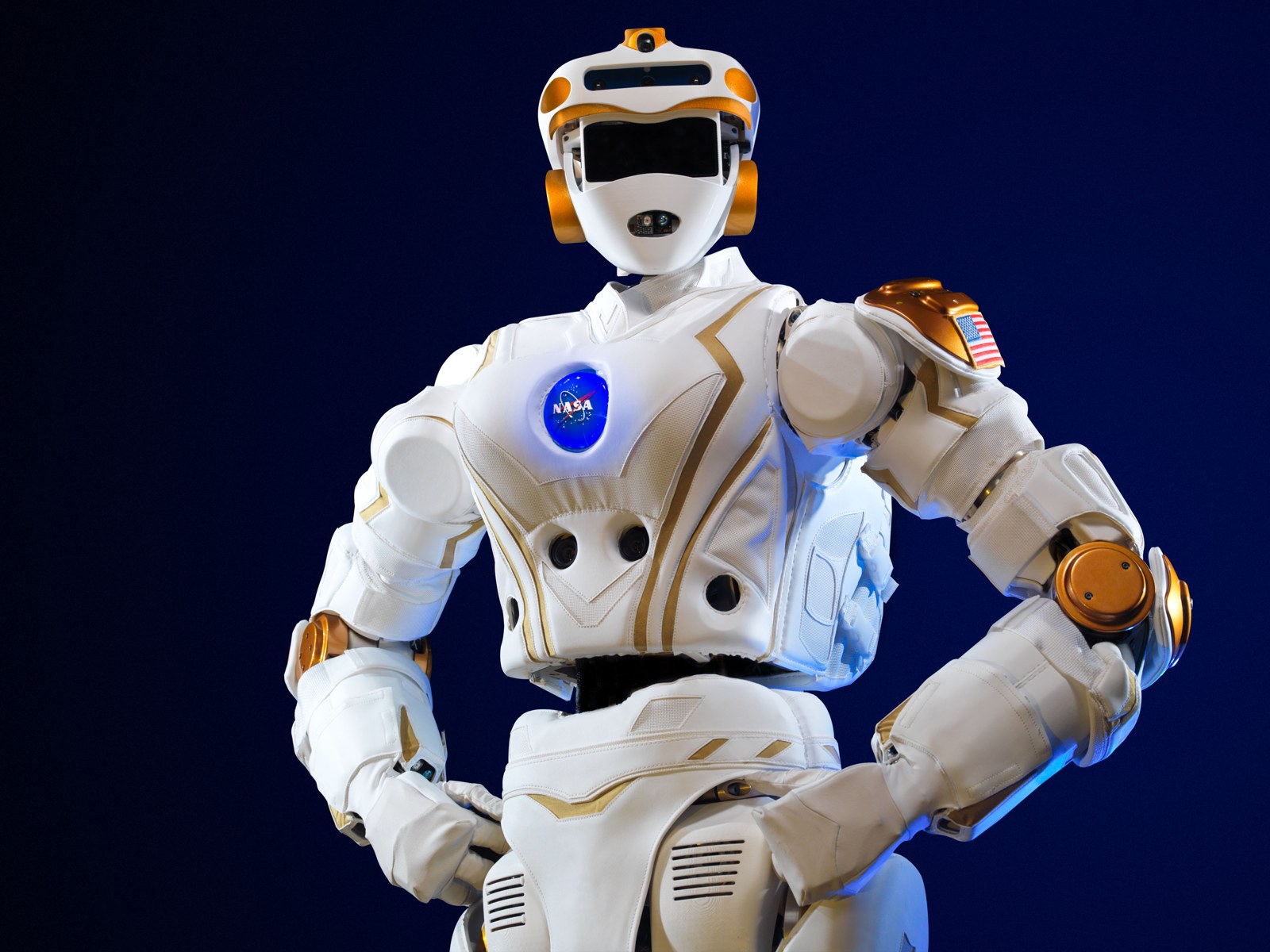
When an intelligent system must act.
Robotics gives the AI journey a physical dimension. A system must interpret its surroundings, choose an action, and deal with the consequences. Opening a door or handling a tool can involve uncertainty that is difficult to capture in a neat digital benchmark.
NASA’s Valkyrie is a humanoid robotics research platform developed for work in challenging environments. The photograph illustrates a genuine engineering effort, not proof of AGI or a general-purpose robot that can already perform any human task. Research platforms help expose what still needs to be solved.
As machines take on more physical roles, progress will depend on reliability, human interaction, and practical constraints as well as intelligence. A remarkable demonstration is an invitation to investigate—not a guarantee of readiness for every setting.
The horizon is a question, not a deadline.
The singularity asks whether a future intelligence could change the pace of progress so profoundly that our usual forecasts stop being useful. One proposed path is recursive self-improvement: AI helps create stronger AI, which becomes better at the same process. Another is a broader acceleration of science and invention.
The difficult part is not imagining a feedback loop; it is establishing how powerful that loop could become. Improvements must survive evaluation. Experiments take resources. Discoveries may meet physical limits. Institutions may adapt, resist, or reshape the direction of development.
This publication treats an eventual singularity as a serious possibility to explore, while leaving room for slower progress, unexpected obstacles, and different outcomes. The purpose is to help readers understand the questions early enough to participate in the future rather than merely react to it.
Big ideas. Clear explanations.
No matching articles. Try another topic.
Powerful progress.
Unfinished questions.
Capability is expanding, but performance remains uneven. Understanding the present means looking beyond impressive demonstrations to reliability, real-world usefulness, and human oversight.
Capability is not consistency.
Success in a demanding benchmark does not guarantee dependable behavior in unfamiliar situations.
Intelligence is not consciousness.
Fluent conversation alone does not establish subjective experience.
There is no agreed countdown.
AGI and singularity forecasts depend on disputed definitions and uncertain assumptions.
For current evidence: Stanford AI Index 2026 ↗
The singularity:
a possibility worth understanding.
Could increasingly capable AI accelerate discovery—and its own development—beyond the pace our institutions can absorb? Explore the mechanisms, constraints, and competing possibilities.
A future of collaboration
AI becomes woven into work and science, with uneven progress and ongoing human direction.
A self-improving frontier
AI contributes to successive advances in AI research, potentially shortening development cycles.
Breakthroughs meet barriers
Physical resources, evaluation, reliability, or diminishing returns slow further progress.
These are explanatory scenarios, not forecasts. A singularity is neither established fact nor an inevitable outcome. No arrival date is assumed.
Understand the words.
Question the claims.
Artificial intelligence
A broad field concerned with systems that perform tasks associated with intelligence, including perception, language, learning, and decision-making.
Machine learning
Methods that adjust a model using data or experience rather than manually specifying every decision rule.
AGI
Artificial general intelligence: broad capability across diverse tasks. Researchers do not share one universally accepted definition or test.
Superintelligence
A hypothetical system that greatly exceeds human intellectual capabilities across a broad range of important domains.
Technological singularity
A hypothetical transition in which technological change becomes extraordinarily rapid or difficult to predict, often associated with advanced AI.
Alignment
Research and practices intended to make AI behavior consistent with intended goals and human values. The meaning of those values and how to evaluate them remain difficult questions.
Recursive self-improvement
A proposed process in which an AI helps improve a successor that can then contribute to further improvements. Its feasibility and speed are uncertain.
Consciousness
Subjective experience. It is distinct from task performance, and there is no universally agreed test for consciousness in machines.
The next chapter
is worth following.
Request occasional editorial updates as we add new guides and explore what comes next. Thoughtful reading, without the daily noise.